Tree Services and Arborist Insurance: Coverage for One of the Riskiest Trades
Mr. Hoots explains why tree service contractors need serious protection when every job involves height, weight, and gravity.
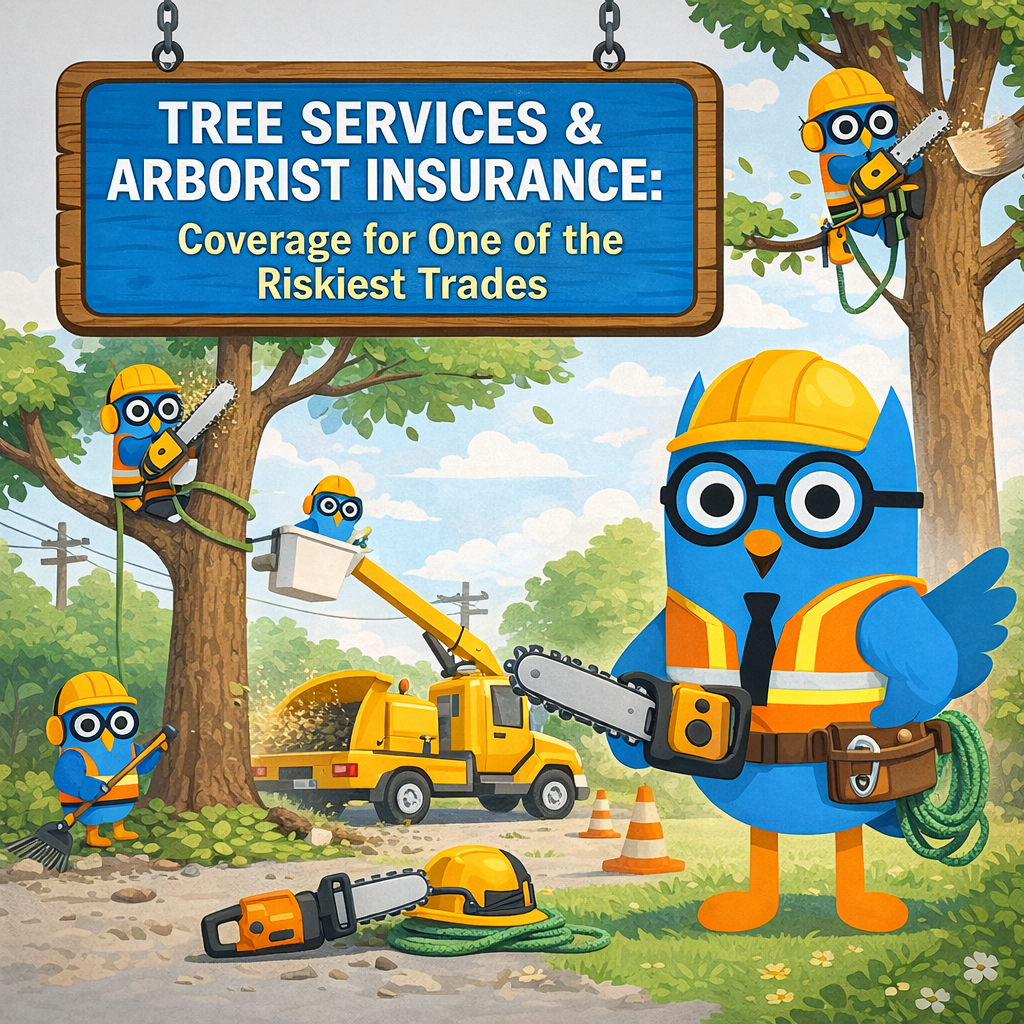
Hoo’s there? Mr. Hoots here, looking up instead of down for once. Tree work is one of the most dangerous contractor trades out there. You deal with chainsaws, heavy limbs, unpredictable falls, power lines, and tight job sites. One wrong cut can cause serious injury, major property damage, or both. That is why tree service and arborist insurance needs to be built right from the start.
Let’s break down the coverage that keeps your business standing tall when the risks are anything but small.
What kinds of risks do tree service contractors face?
- Severe injuries from falls, chainsaws, and heavy equipment
- Property damage from falling limbs or full tree removals
- Damage to roofs, fences, vehicles, or nearby structures
- Contact with overhead power lines
- Equipment theft including chippers, saws, and trailers
- Vehicle accidents while hauling heavy equipment
Core coverage every tree service business should carry
- General Liability (GL) – covers property damage and injuries caused by falling limbs or equipment
- Workers’ Comp – essential for employees and often required by municipalities and commercial clients
- Tools & Equipment (Inland Marine) – covers chainsaws, chippers, lifts, and climbing gear
- Commercial Auto – protects trucks, trailers, and equipment transport
- Umbrella Liability – adds extra protection due to the high severity of tree-related claims
Common claims in the tree service industry
- A limb crashes through a roof or fence during removal
- A worker is injured while climbing or cutting
- Equipment strikes a nearby structure or vehicle
- Tree removal causes unexpected property damage
- Theft of chippers or saws from job sites or trailers
Tree work claims are often high-dollar and fast-moving. Without the right coverage, one job can end a business.
Contract requirements you’ll see often
Homeowners, cities, and commercial clients commonly require:
- Certificate of Insurance (COI) listing them as “Additional Insured”
- Proof of Workers’ Comp coverage
- Higher liability limits, often $1M per occurrence or more
- Waiver of Subrogation language
- Proof of licensing or arborist certification
Having these documents ready is often the difference between winning the job or losing it.
Coverage mistakes to avoid
- Trying to insure tree work under landscaping coverage
- Not disclosing climbing, cutting, or removal work to your carrier
- Skipping Workers’ Comp for crew members or climbers
- Underinsuring heavy equipment and trailers
- Assuming homeowners policies will cover damage you cause
Quick safety wins that also help your rate
- Perform job-site hazard assessments before every cut
- Use proper climbing gear and PPE at all times
- Maintain safe distances from structures and power lines
- Secure equipment and trailers at the end of each day
- Document work plans and crew responsibilities
Mr. Hoots’ Bottom Line
Tree service work is not forgiving. Gravity always wins, and mistakes are costly. The right insurance keeps one bad cut from becoming the end of your business.
Protect the work. Protect the wallet. Because when things fall fast, coverage needs to stand strong